ASX 200 Sees 4% Decline in Q2 2026: Expert Insights
Advertisements
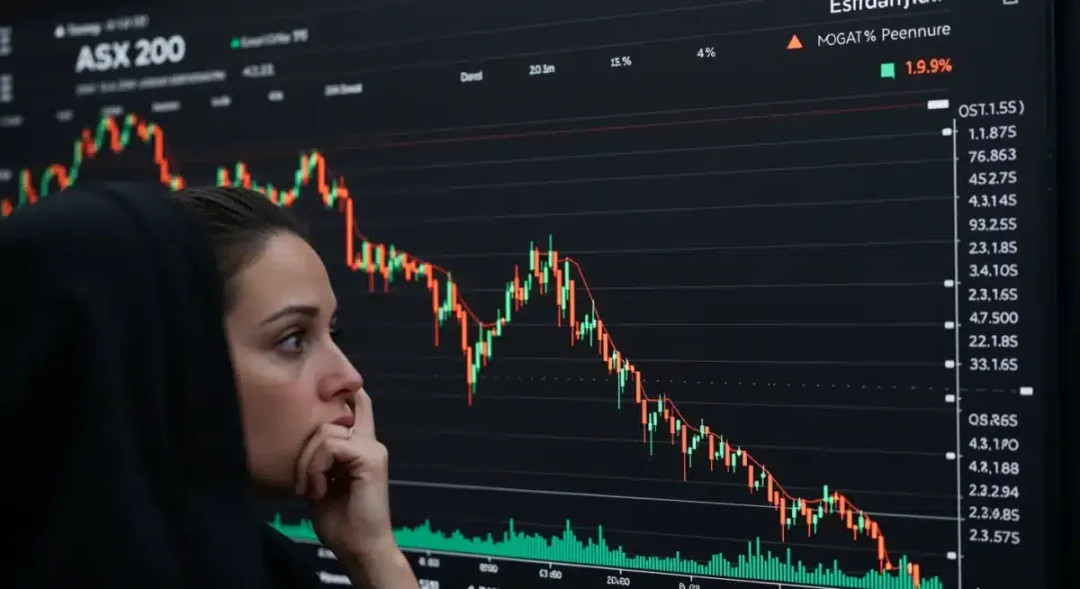
Latest developments on ASX 200 Sees 4% Decline in Q2 2026: Expert Analysis on What’s Driving the Market Downturn, with key facts, verified sources and what readers need to monitor next in Australia, presented clearly in English (Australia).
The Australian financial landscape is currently grappling with a significant shift, as the ASX 200 Sees 4% Decline in Q2 2026: Expert Analysis on What’s Driving the Market Downturn. This notable downturn has sent ripples through investor confidence and prompted a thorough re-evaluation of economic forecasts across the nation.
Analysts are now dissecting the underlying causes, pointing to a confluence of domestic and international pressures that have contributed to this market contraction. Understanding these drivers is crucial for investors seeking to navigate the current volatility and make informed decisions.
This report will delve into the expert perspectives, unpack the primary factors influencing the market, and provide a clear outlook on what this means for the Australian economy and individual financial planning.
Understanding the ASX 200’s Q2 2026 Performance
The second quarter of 2026 witnessed the ASX 200, Australia’s benchmark stock market index, experiencing a significant 4% decline. This movement marks a critical point for the Australian economy, impacting superannuation funds and individual investment portfolios.
This downturn raises questions about the resilience of various sectors and the overall economic sentiment. Market participants are scrutinising this performance to identify patterns and anticipate future trends, which is vital for strategic planning.
The ASX 200 decline analysis indicates a complex interplay of factors, moving beyond simple market corrections to suggest deeper economic shifts are at play. This requires a comprehensive examination of both internal and external influences on the Australian market.
Key Domestic Factors Influencing the Downturn
Several domestic elements have played a pivotal role in shaping the ASX 200’s performance during Q2 2026. Rising inflation coupled with a series of interest rate hikes by the Reserve Bank of Australia (RBA) have tightened monetary policy, impacting consumer spending and business investment.
Furthermore, concerns around the housing market, particularly in major capital cities, have contributed to investor unease. A cooling property market can have significant flow-on effects across the economy, influencing bank profits and consumer wealth.
Labour market dynamics, including wage growth stagnation in some sectors and underemployment, also present challenges. These factors collectively paint a picture of domestic economic headwinds contributing to the ASX 200 decline analysis.
Impact of Rising Inflation and Interest Rates
The persistent inflation pressures have eroded purchasing power, leading to a cautious consumer sentiment. The RBA’s response with successive interest rate increases aims to curb inflation but simultaneously increases borrowing costs for businesses and households.
This dual pressure slows economic activity, making investors wary of future corporate earnings. Companies reliant on consumer discretionary spending or significant debt financing are particularly vulnerable in this environment.
Consequently, sectors such as retail, real estate, and parts of the financial industry have felt the brunt of these monetary policy adjustments, contributing substantially to the overall ASX 200 decline analysis.
Housing Market Cooling and Consumer Confidence
The Australian housing market, a traditional pillar of wealth, has shown signs of cooling, with price growth moderating and, in some areas, declining. This trend affects consumer confidence, as homeowners often feel less wealthy and are more likely to reduce discretionary spending.
The wealth effect from a strong housing market typically boosts consumption, so its deceleration can lead to broader economic slowdowns. Financial institutions with significant mortgage portfolios also face increased risks, which can impact their share prices.
This delicate balance between housing stability and economic growth is a key area of focus for economists dissecting the reasons behind the ASX 200 decline analysis.
Global Economic Headwinds and Their Australian Impact
Beyond domestic challenges, the Australian market is highly susceptible to global economic fluctuations, and Q2 2026 was no exception. Geopolitical tensions, particularly in Eastern Europe and the Middle East, continue to create uncertainty in global supply chains and commodity markets.
Major trading partners, notably China, have also experienced slower economic growth, reducing demand for Australian exports like iron ore and other resources. This directly impacts the mining sector, a significant component of the ASX 200.
Furthermore, broader global inflationary pressures and the monetary policy responses from major central banks worldwide create a challenging external environment. These international factors amplify domestic concerns, making the ASX 200 decline analysis a global affair.
Geopolitical Instability and Supply Chain Disruptions
Ongoing geopolitical conflicts have not only driven up energy prices but also disrupted critical supply chains, leading to higher input costs for Australian businesses. This inflationary pressure is difficult for companies to absorb, often resulting in increased prices for consumers or reduced profit margins.
The uncertainty generated by these global events makes long-term investment planning more complex. Investors tend to shift towards safer assets during times of geopolitical instability, pulling capital from equity markets like the ASX 200.
The ripple effect of these global issues underscores the interconnectedness of the world economy and its direct influence on the performance highlighted in the ASX 200 decline analysis.
Slowing Growth in Key Trading Partners
Australia’s economy is heavily reliant on its export markets, particularly Asia. A slowdown in economic growth from major trading partners such as China, Japan, and South Korea directly translates to reduced demand for Australian goods and services.
This reduced demand affects key sectors like mining, agriculture, and tourism, which are significant contributors to Australia’s GDP and are well-represented on the ASX 200. Lower export volumes and prices can weigh heavily on corporate revenues and profitability.
The diminished economic vigour of these crucial partners is a substantial external factor contributing to the downward trend observed in the ASX 200 decline analysis for Q2 2026.

Sector-Specific Vulnerabilities and Performance
While the overall market saw a decline, certain sectors within the ASX 200 were disproportionately affected, highlighting specific vulnerabilities. The financial sector, heavily exposed to interest rate movements and the housing market, experienced significant pressure.
Similarly, consumer discretionary stocks faced headwinds as inflation and higher living costs curbed household spending. Conversely, some defensive sectors or those less exposed to economic cycles might have shown relative resilience, offering a nuanced view of the market.
Understanding these sector-specific performances is crucial for investors looking to rebalance portfolios and mitigate risks in the wake of the ASX 200 decline analysis. Diversification remains a key strategy.
Financial Sector Under Pressure
The major banks and financial institutions, which constitute a substantial portion of the ASX 200, have been particularly sensitive to the RBA’s interest rate hikes. While higher rates can increase net interest margins, they also elevate the risk of loan defaults and slow new loan growth.
The cooling housing market directly impacts mortgage lending and property valuations, adding another layer of complexity for these institutions. Investor concerns about credit quality and future profitability have driven down share prices across the sector.
This concentrated exposure makes the financial sector a critical component in understanding the broader trends identified in the ASX 200 decline analysis.
Consumer Discretionary Struggles Amidst Cost of Living
With inflation biting into household budgets and interest rates increasing mortgage repayments, Australian consumers are becoming more cautious with their spending. This directly impacts businesses in the consumer discretionary sector, such as retail, hospitality, and travel.
Discretionary spending is often the first to be cut during economic uncertainty, leading to reduced sales volumes and profit warnings for companies in this space. The outlook for these businesses remains challenging until economic conditions stabilise and consumer confidence improves.
The performance of these companies offers a real-time indicator of the economic health of Australian households, significantly contributing to the overall picture of the ASX 200 decline analysis.
Expert Perspectives on the Market Downturn
Leading economists and market strategists have offered varied insights into the ASX 200 Sees 4% Decline in Q2 2026: Expert Analysis on What’s Driving the Market Downturn. Many agree that a combination of factors, rather than a single cause, is responsible for the current state.
Some experts highlight the RBA’s aggressive monetary tightening as a primary catalyst, suggesting that the central bank might have overcorrected. Others point to the persistent global inflation and geopolitical instability as unavoidable external shocks impacting a commodity-dependent economy like Australia’s.
There is also a consensus that while challenging, this period presents opportunities for long-term investors to acquire undervalued assets. However, caution is advised, as market volatility could persist in the short term, requiring careful strategic planning.
Economists’ View on RBA Policy
Many economists argue that the RBA’s interest rate hikes, while necessary to combat inflation, have had a significant contractionary effect on the economy. The speed and magnitude of these increases have impacted economic growth and consumer sentiment more severely than anticipated.
Some suggest that the full impact of these rate rises is yet to be felt, implying further economic adjustments might be on the horizon. This perspective often calls for a more nuanced approach to monetary policy to avoid tipping the economy into a deeper slowdown.
The debate around the RBA’s policy trajectory is central to understanding the current market dynamics and future predictions within the ASX 200 decline analysis.
Market Strategists’ Outlook and Opportunities
Market strategists generally advise investors to remain disciplined and focus on long-term goals despite the current volatility. They suggest that periods of market downturn often create valuable buying opportunities for fundamentally strong companies at lower valuations.
Diversification across different asset classes and geographies is frequently recommended to mitigate risk. Furthermore, a focus on companies with strong balance sheets, consistent earnings, and competitive advantages is paramount during uncertain times.
These strategic insights are crucial for investors looking to navigate the challenges presented by the ASX 200 decline analysis and position themselves for future recovery.
Future Outlook and Investment Strategies
The future outlook for the ASX 200 remains uncertain, with a range of potential scenarios depending on how domestic and global economic conditions evolve. A sustained period of high inflation and further interest rate hikes could prolong the market downturn.
However, signs of inflation moderating, coupled with a stabilisation of global supply chains and improved geopolitical stability, could pave the way for a gradual recovery. Investors should prepare for continued volatility and adopt resilient investment strategies.
This includes reviewing portfolio allocations, considering defensive assets, and maintaining a long-term perspective. The ASX 200 decline analysis underscores the importance of proactive financial planning.

Navigating Volatility: Diversification and Defensive Assets
In a volatile market environment, diversification across various asset classes, industries, and geographies becomes even more critical. This strategy helps to spread risk and reduce the impact of poor performance in any single area.
Considering defensive assets, such as government bonds, utilities, or consumer staples, can provide a buffer against market downturns. These assets typically perform more consistently during economic contractions, offering stability to a portfolio.
A well-diversified portfolio, coupled with a focus on high-quality, dividend-paying stocks, can help weather the storm indicated by the ASX 200 decline analysis.
Long-Term Perspective in Challenging Times
While the immediate impact of the ASX 200 Sees 4% Decline in Q2 2026: Expert Analysis on What’s Driving the Market Downturn can be unsettling, maintaining a long-term investment perspective is essential. Market downturns are a natural part of economic cycles and have historically been followed by periods of recovery.
Impulsive decisions based on short-term market movements often lead to missed opportunities when the market eventually rebounds. Investors are encouraged to stick to their financial plans and regularly review their goals with a financial advisor.
Patience and a strategic approach are key to successfully navigating the current market challenges and emerging stronger in the long run, as suggested by the comprehensive ASX 200 decline analysis.
Government and RBA Responses to Market Conditions
Both the Australian government and the Reserve Bank of Australia are closely monitoring the economic situation and the ASX 200 Sees 4% Decline in Q2 2026: Expert Analysis on What’s Driving the Market Downturn. Their responses will be crucial in shaping future market performance and economic stability.
The RBA’s primary focus remains on managing inflation, but it also considers the broader implications of its monetary policy decisions on economic growth and employment. Any future rate decisions will be carefully weighed against these competing objectives.
The government might consider fiscal measures to support economic activity, such as targeted spending or tax incentives, to complement the RBA’s monetary policy. Coordinated efforts will be vital to address the current economic headwinds effectively.
RBA’s Monetary Policy Dilemma
The RBA faces a delicate balancing act: taming inflation without triggering a severe economic recession. Its decisions on future interest rate adjustments will be heavily influenced by incoming economic data, including inflation figures, employment rates, and consumer spending trends.
Any signals of a shift in the RBA’s stance, whether a pause in rate hikes or even a potential cut, would likely have a significant impact on market sentiment and the ASX 200. Investors are keenly watching for any forward guidance from the central bank.
The RBA’s communication and actions will be a critical determinant in how the market processes the information from the ASX 200 decline analysis moving forward.
Government Fiscal Support and Economic Stimulus
While the RBA manages monetary policy, the Australian government has tools to influence the economy through fiscal policy. In times of economic slowdown, the government might implement stimulus packages or targeted support measures to boost demand and employment.
These measures could include infrastructure spending, tax relief, or direct support for affected industries. The effectiveness of such policies often depends on their timing and targeting, aiming to provide a meaningful uplift without exacerbating inflation.
The interplay between government fiscal policy and RBA monetary policy will be pivotal in determining the trajectory of the Australian economy and the recovery of the ASX 200 following the ASX 200 decline analysis.
The Role of Investor Sentiment and Market Psychology
Investor sentiment plays a significant, often underappreciated, role in market movements, especially during periods of volatility. Fear and uncertainty can lead to panic selling, exacerbating downward trends even when underlying fundamentals might not fully justify such movements.
Conversely, renewed confidence can fuel market rallies. The current environment, marked by the ASX 200 Sees 4% Decline in Q2 2026: Expert Analysis on What’s Driving the Market Downturn, has undoubtedly impacted investor psychology, leading to a more cautious approach.
Understanding these psychological factors is important for investors to avoid emotional decisions and maintain a rational, data-driven approach to their investment strategies. Market psychology can create both risks and opportunities.
Fear and Greed in Market Cycles
The market is often driven by the twin emotions of fear and greed. During a downturn, fear can dominate, leading investors to sell off assets to avoid further losses, sometimes irrespective of the actual value of those assets. This can create a downward spiral.
Conversely, periods of strong growth are often fuelled by greed, where investors might take on excessive risk in pursuit of higher returns. Smart investors aim to recognise these emotional cycles and make decisions based on objective analysis, rather than succumbing to herd mentality.
The current ASX 200 decline analysis highlights a period where fear is likely a dominant force, influencing trading patterns and investment decisions across the market.
Building Resilience Through Informed Decisions
In a market environment characterised by uncertainty and potential for further declines, building resilience through informed decision-making is paramount. This involves staying updated on economic news, understanding expert analysis, and regularly reviewing one’s financial goals.
Avoiding speculative investments and focusing on quality assets that align with one’s risk tolerance can help navigate turbulent times. Education and access to reliable financial advice are invaluable tools for investors facing the current challenges.
Empowering oneself with knowledge and maintaining a disciplined approach are key strategies for managing the impacts of the ASX 200 decline analysis and safeguarding financial well-being.
| Key Point | Brief Description |
|---|---|
| Market Performance | ASX 200 experienced a significant 4% decline in Q2 2026. |
| Driving Factors | Domestic inflation, RBA rate hikes, housing market, global tensions, and slowing trade. |
| Sector Impact | Financial and consumer discretionary sectors most affected. |
| Investor Strategy | Diversification, defensive assets, and long-term perspective recommended. |
Frequently Asked Questions About the ASX 200 Decline
What caused the 4% decline in the ASX 200 in Q2 2026?▼The decline was primarily driven by a combination of factors including rising domestic inflation, aggressive interest rate hikes by the RBA, a cooling housing market, global geopolitical tensions, and slower growth among Australia’s key trading partners, particularly China.
Which sectors were most impacted by the ASX 200 downturn?▼The financial sector, due to its exposure to interest rates and the housing market, and consumer discretionary stocks, impacted by reduced household spending amidst cost-of-living pressures, experienced the most significant negative effects during this period.
How should investors adjust their strategies in response to this decline?▼Experts recommend focusing on diversification across asset classes, considering defensive investments, and maintaining a long-term perspective. Avoiding impulsive decisions and regularly reviewing portfolios with a financial advisor are crucial during volatile periods.
What is the RBA’s role in addressing the current market conditions?▼The RBA’s primary role is to manage inflation through monetary policy, including interest rate adjustments. Its decisions aim to stabilise prices while also considering broader economic growth and employment, navigating a delicate balance in the current environment.
What is the future outlook for the Australian stock market?▼The outlook remains uncertain, dependent on the evolution of domestic inflation, global economic stability, and government responses. While volatility is expected, potential opportunities for long-term investors may emerge as the market seeks a new equilibrium.
What This Means Now
The ASX 200 Sees 4% Decline in Q2 2026: Expert Analysis on What’s Driving the Market Downturn underscores a period of significant economic adjustment for Australia. This requires investors and financial planners to remain agile and informed, closely monitoring both domestic policy shifts and global economic indicators.
The coming months will reveal the full impact of current headwinds and the effectiveness of RBA and government responses. Staying updated on these developments is paramount for making sound financial decisions and navigating potential further volatility.
Ultimately, this downturn highlights the importance of robust financial planning, diversification, and a long-term investment horizon in building and protecting wealth amidst an evolving economic landscape.