Medicare Advantage Open Enrollment: Switching Plans
Advertisements
The Medicare Advantage Enrollment Period allows eligible beneficiaries to change their healthcare plans between January 1 and March 31, providing an opportunity to reassess coverage, healthcare costs, provider networks, and prescription drug benefits.
The Medicare Advantage Enrollment Period provides eligible beneficiaries with an opportunity to reconsider their healthcare coverage and make adjustments based on their individual needs.
Understanding enrollment deadlines, available plan options, and coverage restrictions can help individuals avoid unexpected expenses and unnecessary interruptions when accessing essential healthcare services.
This guide explains eligibility requirements, permitted plan changes, important financial considerations, and official resources available to beneficiaries preparing for the upcoming enrollment period.
Understanding the Medicare Advantage Open Enrollment Period
The Medicare Advantage Enrollment Period allows individuals already enrolled in Medicare Advantage to make specific changes to their existing healthcare coverage each year.
This enrollment opportunity differs from the annual Medicare Open Enrollment Period, which allows a broader range of beneficiaries to make changes to their coverage.
Eligible individuals can switch to another Medicare Advantage plan or return to Original Medicare, with the option of joining a separate prescription drug plan.
Key Dates and Deadlines for the MA OEP
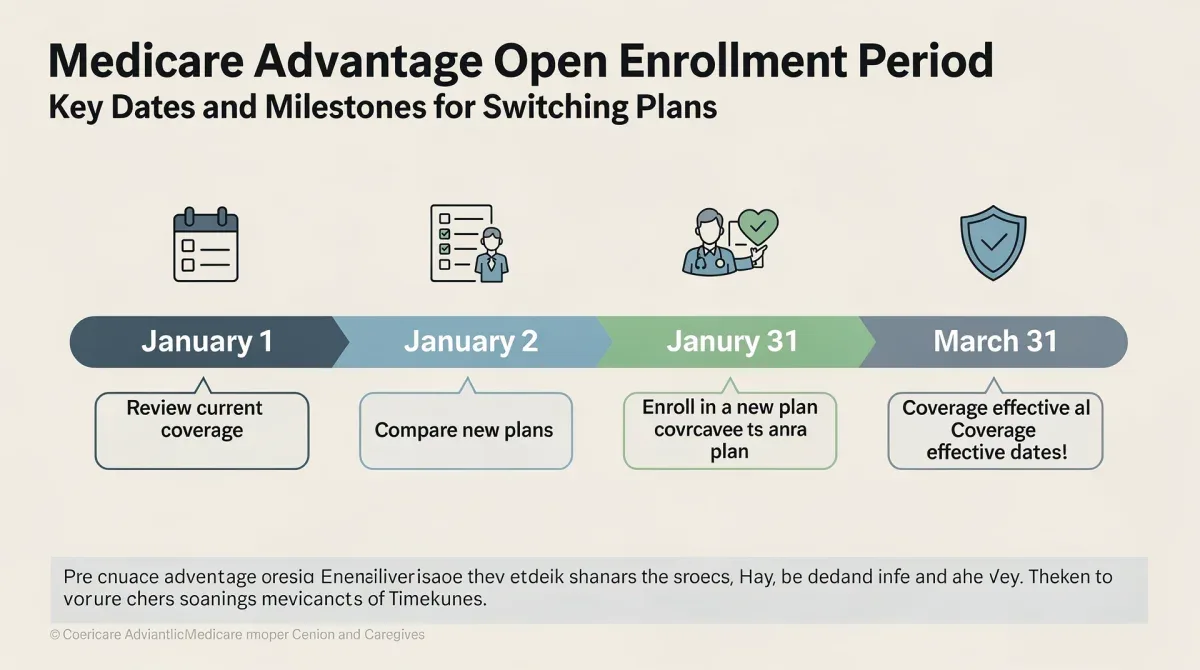
The upcoming Medicare Advantage Enrollment Period begins on January 1, 2027, and continues through March 31, 2027, for beneficiaries already enrolled in eligible plans.
Coverage changes generally become effective on the first day of the month after the selected plan receives and processes the beneficiary's enrollment request.
For example, an eligible change requested during February generally takes effect on March 1, provided the enrollment requirements have been properly satisfied.
Differences Between Annual and Medicare Advantage Enrollment
The annual Medicare Open Enrollment Period takes place between October 15 and December 7, allowing eligible beneficiaries to make broader changes to their coverage.
Changes requested during the 2026 annual enrollment window generally become effective on January 1, 2027, subject to applicable enrollment requirements and processing procedures.
The Medicare Advantage Enrollment Period beginning in January provides a separate opportunity specifically intended for beneficiaries who are already participating in Medicare Advantage.
Who Can Utilize the Medicare Advantage Enrollment Period?
The January enrollment window primarily serves beneficiaries who already have Medicare Advantage coverage and wish to reconsider their current healthcare arrangements for various reasons.
Individuals enrolled in Original Medicare cannot generally use the Medicare Advantage Enrollment Period to join a Medicare Advantage plan for the first time.
Beneficiaries should confirm their enrollment status and applicable eligibility requirements before attempting to change plans or modify their existing prescription drug coverage arrangements.
Enrollment Options for New Medicare Beneficiaries
Individuals who initially join Medicare Advantage when becoming eligible for Medicare may qualify for an additional opportunity to reconsider their selected healthcare plan.
This opportunity generally extends through the first three months during which the individual has both Medicare Part A and Medicare Part B coverage.
New beneficiaries should confirm their specific eligibility dates because this enrollment opportunity does not necessarily follow the standard January through March annual schedule.
Understanding the One-Change Rule
The Medicare Advantage Enrollment Period generally allows beneficiaries to make one election change, making careful evaluation particularly important before submitting a new enrollment request.
Individuals should compare available options thoroughly because they cannot ordinarily make repeated plan changes using the same annual Medicare Advantage Open Enrollment opportunity.
However, beneficiaries who subsequently qualify for a separate Special Enrollment Period may have additional opportunities to modify their coverage under applicable Medicare rules.
Reasons to Switch During the Critical Three-Month Window
Beneficiaries may consider switching Medicare Advantage plans because of changing healthcare needs, unexpected expenses, provider network restrictions, or differences in available prescription drug coverage.
The Medicare Advantage Enrollment Period offers an opportunity to evaluate these concerns and determine whether another available plan may better accommodate individual healthcare requirements.
Before making changes, beneficiaries should review their current coverage documents and compare the potential advantages and disadvantages associated with alternative healthcare arrangements.
Common Scenarios for Plan Changes
Changes involving doctors, hospitals, or specialists may affect healthcare access, particularly when beneficiaries regularly receive treatment from providers outside their current plan's network.
Increased copayments, deductibles, or prescription medication expenses may also encourage individuals to explore alternative plans that offer more suitable financial arrangements for their circumstances.
Additional services, including dental, vision, and hearing coverage, may influence plan preferences, although their availability and limitations vary between individual Medicare Advantage plans.
Reviewing Changes to Existing Healthcare Benefits
Beneficiaries should review their Annual Notice of Change to identify adjustments involving premiums, covered services, prescription medications, and other important healthcare plan provisions.
Understanding broader developments affecting federal benefit programs may provide additional policy context, although individual Medicare coverage decisions should rely on official plan documentation.
The Medicare Advantage Enrollment Period provides an opportunity to respond to relevant plan changes when alternative coverage better aligns with personal healthcare requirements.
The Process of Switching Medicare Advantage Plans
Switching Medicare Advantage plans generally involves submitting an enrollment request to an eligible alternative plan during an authorized enrollment period and satisfying applicable requirements.
Once the new coverage becomes effective, enrollment in the previous Medicare Advantage plan normally ends automatically, reducing the need for separate cancellation procedures.
Beneficiaries should confirm their new coverage start date and review important enrollment communications before assuming that their existing healthcare arrangements have officially changed.
Steps to Take When Considering a Switch
Begin by reviewing current healthcare expenses, medication requirements, preferred medical providers, and any limitations associated with the services covered under your existing Medicare plan.
During the Medicare Advantage Enrollment Period, compare available alternatives carefully, paying particular attention to provider participation, prescription drug formularies, premiums, and annual spending limits.
After selecting an appropriate option, complete the enrollment process through authorized channels and retain confirmation of the submitted request and expected coverage effective date.
Returning to Original Medicare
Beneficiaries who prefer Original Medicare may use an applicable enrollment opportunity to leave Medicare Advantage and receive healthcare coverage through Medicare Part A and Part B.
Individuals making this transition should evaluate whether they need a separate Medicare Part D plan to maintain appropriate prescription drug coverage after leaving Medicare Advantage.
When joining a standalone drug plan through this enrollment option, beneficiaries generally do not need to submit a separate request to leave Medicare Advantage.
Important Considerations Before Making a Change
The Medicare Advantage Enrollment Period requires careful consideration of healthcare expenses, provider availability, medication coverage, and the restrictions associated with different types of plans.
Beneficiaries should avoid selecting coverage based exclusively on monthly premiums because other expenses may significantly influence the total cost of healthcare throughout the year.
Reviewing the complete Evidence of Coverage document can help individuals understand covered services, exclusions, authorization requirements, and financial responsibilities before completing a plan change.
Avoiding Common Pitfalls During MA OEP
One common mistake involves overlooking enrollment restrictions and assuming that additional plan changes can be made freely after completing an initial Medicare Advantage election.
Beneficiaries should also verify supplemental services independently rather than assuming that advertised benefits provide unlimited access to dental, vision, transportation, or other healthcare services.
During the Medicare Advantage Enrollment Period, rely on official information and avoid unsolicited communications that pressure individuals into making immediate or poorly informed enrollment decisions.
Considering Employment and Other Benefit Arrangements
Some Medicare beneficiaries continue working or receive healthcare coverage through employment arrangements, making it important to understand how different insurance benefits may interact.
Individuals participating in independent work may also wish to understand broader benefits for workers in the gig economy, particularly when evaluating their overall financial responsibilities.
Those receiving additional assistance should confirm how changes to Medicare coverage might affect their existing arrangements before completing any enrollment or disenrollment requests.
Coordinating Medicare With Veterans' Healthcare Benefits
Veterans who qualify for Medicare and healthcare services through the Department of Veterans Affairs should understand the distinctions between these separate healthcare coverage systems.
Changes involving Veterans Affairs financial benefits may influence broader household planning, but they do not automatically determine eligibility for specific Medicare Advantage enrollment opportunities.
Beneficiaries receiving veterans' healthcare services should confirm how their preferred providers, prescription medications, and other healthcare needs would be affected by changing Medicare plans.
Comparing Plan Types: HMOs, PPOs, and PFFS
Several types of Medicare Advantage plans are available, offering different approaches to provider networks, specialist referrals, healthcare expenses, and access to medical services.
During the Medicare Advantage Enrollment Period, understanding these structural differences can help beneficiaries identify plans that align more closely with their individual healthcare preferences.
Availability varies according to geographic location, insurance providers, and annual plan offerings, so individuals should confirm which options are accessible within their service area.
Health Maintenance Organization Plans
Health Maintenance Organization plans generally require beneficiaries to receive routine healthcare services through participating providers, although exceptions apply to emergencies and certain other situations.
Some HMO plans require members to select a primary care physician and obtain referrals before accessing particular specialist services or receiving certain medical treatments.
Individuals considering these plans should verify whether their preferred healthcare professionals participate in the network and understand the associated rules for accessing covered services.
Preferred Provider Organization Plans
Preferred Provider Organization plans generally offer greater flexibility regarding provider selection, although beneficiaries may face higher expenses when receiving services outside the established network.
These plans may appeal to individuals who prefer additional provider choices, particularly when their healthcare requirements involve multiple specialists or treatment facilities in different locations.
The Medicare Advantage Enrollment Period allows beneficiaries to compare available PPO options, including premiums, network arrangements, prescription coverage, and the costs associated with outside providers.
Private Fee-for-Service Plans
Private Fee-for-Service plans operate through specific payment arrangements that establish how participating healthcare providers are compensated and what beneficiaries may pay for covered services.
Individuals may receive care from Medicare-approved providers who accept the plan's payment terms, although provider acceptance should be confirmed before obtaining nonemergency healthcare services.
Beneficiaries should review individual PFFS plan conditions because network arrangements, prescription drug coverage, and provider participation requirements can vary considerably between available options.
Making an Informed Decision
Selecting an appropriate plan involves considering personal healthcare requirements, preferred providers, expected medical expenses, and the potential financial consequences of receiving care outside established networks.
Understanding state-specific variations in benefit programs can provide useful context when evaluating available assistance, although Medicare Advantage availability also varies by local service area.
During the Medicare Advantage Enrollment Period, beneficiaries should compare individual plan documents rather than assuming that every plan within a particular category operates identically.
Understanding Prescription Drug Coverage
Prescription drug coverage remains an important consideration because Medicare Advantage plans can differ in medication formularies, pharmacy networks, cost-sharing arrangements, and applicable coverage restrictions.
Beneficiaries should verify whether their current medications appear on the proposed plan's formulary and understand any requirements involving prior authorization or approved treatment alternatives.
The Medicare Advantage Enrollment Period provides an opportunity to consider alternative coverage when existing prescription arrangements no longer adequately address individual medication requirements.
Checking Formularies and Pharmacy Networks
A drug formulary identifies medications covered by an insurance plan and may organize them into different categories that influence the amount beneficiaries must pay.
Pharmacy network arrangements can also affect medication expenses, making it important to confirm whether preferred pharmacies participate in the selected plan's prescription drug program.
Individuals should compare their expected annual medication expenses rather than relying exclusively on monthly premiums when evaluating the financial suitability of alternative healthcare plans.
Medigap and the Risks of Returning to Original Medicare
Medicare Supplement Insurance, commonly called Medigap, helps cover certain expenses associated with Original Medicare, including some deductibles, copayments, and other applicable cost-sharing responsibilities.
Returning to Original Medicare during the Medicare Advantage Enrollment Period does not automatically establish a new guaranteed opportunity to purchase a Medicare Supplement Insurance policy.
Beneficiaries should investigate their Medigap eligibility, available protections, and potential premiums before leaving Medicare Advantage, particularly when they have existing medical conditions.
Understanding Guaranteed Issue Rights
Guaranteed issue protections may require insurers to offer certain Medigap policies without denying coverage based on health conditions when beneficiaries meet applicable eligibility circumstances.
Outside protected enrollment opportunities, insurers may use medical underwriting where permitted, potentially affecting policy availability or the premiums offered to individuals seeking supplemental coverage.
Because state laws may provide additional protections, beneficiaries should obtain guidance about their specific circumstances before making decisions that could affect future supplemental insurance access.
Comparing Healthcare Costs Before Switching Plans
Evaluating total healthcare expenses requires considering monthly premiums, annual deductibles, copayments, coinsurance, prescription drug costs, and potential spending associated with covered medical services.
The Medicare Advantage Enrollment Period provides an opportunity to reconsider these financial responsibilities when an existing plan no longer aligns with an individual's budget.
Beneficiaries should estimate expected healthcare expenses across the entire year while accounting for unexpected medical needs and the limitations associated with individual plan benefits.
Understanding Premiums and Annual Spending Limits
A Medicare Advantage plan with a low monthly premium may still involve substantial expenses when beneficiaries frequently access medical services or require specialized treatments.
Broader changes involving federal employee healthcare premiums may affect household budgeting, particularly for individuals coordinating Medicare with other insurance arrangements.
Medicare Advantage plans have annual limits on out-of-pocket expenses for covered Part A and Part B services, although prescription drug spending follows separate rules.
Resources and Support for Beneficiaries
Beneficiaries navigating the Medicare Advantage Enrollment Period can access official resources designed to explain coverage options, enrollment requirements, and procedures for changing healthcare plans.
The official Medicare Plan Finder allows users to compare available coverage options based on location, estimated costs, prescription medication requirements, and plan characteristics.
State Health Insurance Assistance Programs also provide free, unbiased counseling to help Medicare beneficiaries understand their options and evaluate important healthcare coverage decisions.
Official Guidance and Trusted Advisors
Beneficiaries can contact Medicare directly by calling 1-800-MEDICARE, where representatives can provide information about enrollment opportunities, coverage options, and applicable program requirements.
Licensed insurance representatives may also assist with plan comparisons, although beneficiaries should understand whether those representatives receive compensation or represent only selected insurance providers.
Independent counseling can be particularly valuable during the Medicare Advantage Enrollment Period when individuals need help understanding complicated coverage arrangements or potential financial consequences.
Protecting Yourself Against Medicare Enrollment Scams
Unexpected communications requesting Medicare identification numbers, financial details, or immediate enrollment decisions should be approached cautiously, especially when the sender's identity cannot be independently verified.
Beneficiaries should avoid sharing sensitive information through unfamiliar websites, unsolicited messages, or telephone calls from individuals claiming to guarantee special healthcare benefits or savings.
When uncertain about an enrollment communication, contact Medicare or your current insurance provider directly using independently verified contact details before taking any further action.
What Happens If You Miss the Enrollment Deadline?
Missing the March 31 deadline generally means beneficiaries cannot use that year's Medicare Advantage Open Enrollment opportunity to make an additional change to their coverage.
However, certain circumstances may establish eligibility for Special Enrollment Periods, including qualifying relocation, changes in insurance availability, or other situations recognized under Medicare rules.
Individuals should contact Medicare to determine whether an alternative enrollment opportunity applies before assuming that they must wait until the next annual enrollment period.
Understanding Special Enrollment Periods
Special Enrollment Periods allow eligible beneficiaries to make certain coverage changes outside standard enrollment windows when qualifying events occur or specific eligibility conditions are met.
Available changes and deadlines vary according to the qualifying circumstances, meaning beneficiaries should obtain guidance about their particular situation rather than relying on generalized assumptions.
These additional opportunities operate separately from the Medicare Advantage Enrollment Period and may provide important flexibility for individuals experiencing significant changes in their circumstances.
What Happens Next?

The upcoming Medicare Advantage Enrollment Period provides beneficiaries with an opportunity to evaluate healthcare coverage after new annual plan arrangements become effective in January 2027.
Individuals should review official notices, compare available healthcare options, and consider broader retirement benefit policies when developing their personal healthcare and financial plans.
Preparing early can help beneficiaries understand their available options without rushing important decisions concerning medical providers, prescription coverage, and expected healthcare expenses.
Conclusion
The Medicare Advantage Enrollment Period offers eligible beneficiaries an important opportunity to reassess their healthcare coverage and make appropriate adjustments between January and March.
Careful comparison of provider networks, prescription drug coverage, financial responsibilities, and supplemental insurance options can help individuals make more informed decisions about their healthcare.
Beneficiaries should rely on official Medicare resources and independent counseling when necessary, ensuring that any coverage changes reflect their personal healthcare requirements and financial circumstances.
Key Point | Brief Description |
|---|---|
Annual Enrollment Period | October 15 through December 7 annually, with eligible changes generally effective January 1. |
Medicare Advantage Enrollment Window | January 1 through March 31 annually for eligible existing Medicare Advantage beneficiaries. |
Permitted Changes | Switch Medicare Advantage plans or return to Original Medicare, with the option of joining a standalone Part D plan. |
Number of Changes | Generally one election change during the annual Medicare Advantage Open Enrollment Period. |
Key Considerations | Provider networks, prescription drug formularies, premiums, out-of-pocket expenses, and supplemental benefits. |
Effective Date | Generally the first day of the month following the plan's receipt of an eligible enrollment request. |
Medigap Considerations | Returning to Original Medicare does not automatically establish guaranteed eligibility for a Medigap policy. |
Special Enrollment Periods | Additional enrollment opportunities may be available when beneficiaries experience qualifying circumstances. |
Official Assistance | Medicare.gov, 1-800-MEDICARE, and State Health Insurance Assistance Programs. |
Frequently Asked Questions About Medicare Advantage Open Enrollment
What is the Medicare Advantage Open Enrollment Period?
The Medicare Advantage Open Enrollment Period takes place from January 1 through March 31 each year. It allows eligible existing Medicare Advantage beneficiaries to switch plans or return to Original Medicare, with the option of joining a separate prescription drug plan.
When is the Medicare Advantage Enrollment Period in 2027?
The annual Medicare Advantage Open Enrollment Period runs from January 1 through March 31, 2027, for eligible beneficiaries already enrolled in Medicare Advantage.
How many changes can I make during this period?
Beneficiaries can generally make one election change during the Medicare Advantage Open Enrollment Period. Additional changes may be possible if they subsequently qualify for a separate Special Enrollment Period.
When do changes made during MA OEP become effective?
Changes generally take effect on the first day of the month after the plan receives an eligible enrollment request. For example, a request received during February generally becomes effective on March 1.
Can I enroll in Medicare Advantage for the first time during MA OEP?
No. Individuals enrolled in Original Medicare generally cannot use the January through March Medicare Advantage Open Enrollment Period to join Medicare Advantage. Other enrollment opportunities may be available depending on their eligibility and circumstances.
Can I return to Original Medicare during this period?
Yes. Eligible Medicare Advantage beneficiaries may return to Original Medicare and have the option of joining a standalone Medicare Part D prescription drug plan.
Am I guaranteed to qualify for Medigap after leaving Medicare Advantage?
No. Medigap eligibility and guaranteed issue protections depend on individual circumstances and applicable federal and state rules. Beneficiaries should investigate available options before leaving Medicare Advantage.
Can I change only my standalone Medicare Part D plan during MA OEP?
Individuals who already have Original Medicare cannot generally use the Medicare Advantage Open Enrollment Period to change their standalone Part D plan. They must qualify for another applicable enrollment opportunity.
What happens if I miss the March 31 deadline?
You may need to wait until another authorized enrollment period unless you qualify for a Special Enrollment Period. Contact Medicare to determine whether your circumstances permit an additional coverage change.
What resources are available to help me make a decision?
Beneficiaries can use the official Medicare Plan Finder, receive free counseling through State Health Insurance Assistance Programs, or call 1-800-MEDICARE for information about enrollment options and healthcare coverage.